 Amy Marietta
How to properly experience the Fall foliage in Massachusetts
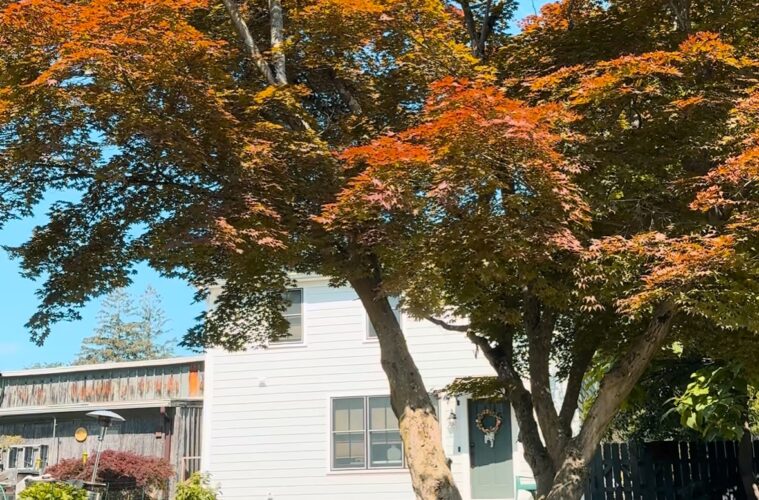
New England is famed for the beauty and vibrancy of its Fall foliage, and Massachusetts is one of the most popular destinations for leaf peepers from September to November. However, you can’t just head to a random spot in Massachusetts and hope for the best. Peak foliage timing changes a lot depending on things like elevation, temperature, and other regional factors. So, if you want to drink in some gorgeous foliage in Massachusetts this Fall and take the best possible pictures, it pays to know a few things in advance. Here’s a quick guide to help out:
Boston is a good base
Leaf peepers often dismiss Boston as a base for foliage tourism, but in fact, it’s very well-situated for access to a range of viewpoints, microclimates, landscapes, seascapes, and so on. If you want to experience the full variety of Massachusetts foliage, a base like Boston will often serve you a lot better than isolated rural bases. For example, it’s easy to drive from Boston to most major Massachusetts foliage viewpoints, and there are rail and coach options connecting with places like Salem, Concord, and the inland Western forests. If you want a more varied foliage experience that takes in the full breadth and depth of what’s on offer, you need a base that gives you access to the majority of the state. What’s more, it’s easy to find cheap Boston hotels that let you go on your leaf safari without too much initial expenditure. More isolated hotels tend to cover their higher overheads with higher nightly rates.
Head to the Berkshires for classic landscapes
Set off towards the borders of New York and Vermont to find the Berkshires. Named for the county in England that they resemble, you’ll find undulating landscapes, deciduous forests turning bright red and deep gold as the season changes, and charming small towns. Head to Mount Greylock, the highest point in Massachusetts, for unparalleled views over the forests and mountains, and explore the Mohawk Trail for some of the state’s very best foliage scenery.
Bear in mind that the Berkshires are very popular with leaf-peepers, so the roads can be busy during October weekends. It’s also an area historically associated with Norman Rockwell and Gilded Age tourism and wealth. This has left a strong artistic and sociological legacy in the area.
Take the Mohawk Trail
Pre-colonization, the Mohawk Trail was a footpath used for trade, travel, hunting, and so on. Today, it survives as a scenic route running across northern Massachusetts (officially designated ‘Route 2’ through much of the region). It stretches roughly 90 miles through mountainous forested landscapes. Hairpin Turn near North Adams is a popular viewpoint, as it gives wide, sweeping views out over the valleys – if you get there at the right time of year, you’ll get panoramic shots of deep and vibrant Fall leaves all over an undulating mountain landscape. Do be careful on the turn itself, though – pull into the nearby parking lot and restaurant to take your pics and enjoy the scenery.
Other good stopping points include Shelburne Falls with its famous Bridge of Flowers, Charlemont, and Florida Mountain.
Visit Concord to combine beautiful views with culture and history
Concord, northwest of Boston, has strong links to America’s literary past. Here, you’ll find Walden Pond, where (and about which) transcendentalist writer Henry David Thoreau famously wrote ‘Walden; or, Life in the Woods’. Today, you can explore the woods where Thoreau lived, and visit a replica of his cabin. It’s a beautiful spot at any time of year, but particularly breathtaking when the foliage turns golden during the Fall.
Literary buffs will also appreciate Sleepy Hollow Cemetery. This is the resting place of a number of great American writers, including Ralph Waldo Emerson, Louisa May Alcott (author of the ‘Little Women’ books), Nathaniel Hawthorne (of ‘The Scarlet Letter’ fame), and Henry David Thoreau himself.
The town itself has tree-lined avenues and historic houses, which become particularly photogenic during October. You’ll also find smaller crowds here than in nearby Salem – perfect if you prefer a quieter, more contemplative day out.
Salem is busy, but well worth a visit
As you might expect for the home of America’s most notorious witch trials, Salem becomes very busy indeed during ‘spooky season’. If you visit near Halloween, you’re likely to find the town quite crowded. However, the atmosphere is lively, and you’ll find plenty to do if you do decide to head here during Fall, despite (and sometimes because of!) the crowds.
The historic district of Salem Common is open and easy to access – it’s a good spot to take a breather and get a bit of a break from the Halloween hubbub. It’s also a great location for foliage-hunting, as the common itself is leafy and green. In the town itself, be sure to visit the House of the Seven Gables, which was the setting of Nathaniel Hawthorne’s novel of the same name. Salem Maritime National Historic Site is also a gorgeous spot where you can take in lovely foliage and coastal views.
Pick your timings carefully
The best time of year to visit Massachusetts for Fall foliage varies a lot. The weather can have a big impact on the timing and intensity of foliage colors – dry summers or severe storms can dull the displays. However, as a general guide, here’s when to visit each area:
- Late September: northern Berkshires begin changing.
- Early October: western Massachusetts peaks.
- Mid-October: central Massachusetts is strongest.
- Late October: Boston and coastal areas are often strongest.
It’s worth noting that higher areas often change earlier because the temperatures are cooler at night.
If you’re not sure what kinds of trees to look for, or are after specific colors or scenes, here’s a quick primer:
- Sugar maples create the brightest reds and oranges.
- Oaks tend to turn deep bronze and brown late in the season
- Red maples, as the name suggests, turn vibrant reds and crimsons earlier in the season
- American beech trees turn a brilliant golden-bronze – you’ll often find beeches clustered together in a sea of gold rising up the hillsides
- American larch is perfect for bright, luminous yellow shades
Conclusion
A leap-peeping trip to Massachusetts can be a fantastic travel experience, combining breathtaking, colorful scenery with old American culture and architecture. However, it’s worth knowing a few things – such as where to visit, when you’ll get the best views, and so on – in advance. Hopefully, this article will help you to get the very best out of your Fall foliage trip to Massachusetts. Happy leaf-peeping!
